

Chrome Casing for CCS: Why Every Connection Gets Graphed
Carbon capture wells are turning into real work. Quest has been injecting north of a million tonnes a year since 2015, and more storage schemes are moving through the regulatory process behind it. For the people planning these wells, one thing is already clear. A CO2 injection well asks more of its casing string than a producer does, and it asks more of the crew that runs it.
Why the string goes chrome
Dry CO2 is easy on steel. Wet CO2 is not. The moment water shows up in the stream, you get carbonic acid, and carbonic acid eats carbon steel. That is why injection strings move to chrome. 13Cr, usually as L80-13Cr, is the workhorse grade for CO2 service, with higher alloys reserved for wells where chlorides, H2S or temperature push past what 13Cr handles.
Material selection for CO2 service is still a moving target, and the design work belongs to the operator’s engineers. But whatever metallurgy the design lands on, the string only performs if every connection goes together right. That part happens on location, joint by joint.
What chrome changes on location
Chrome is less forgiving than carbon steel in every way that matters during make-up. The threads are harder and they gall. Once a 13Cr connection galls, you are not cleaning it up with a wire brush. The joint is damaged, and the seal it depends on may be compromised.
So the whole rhythm of the run changes. Make-up speed comes down. Thread compound gets exact, the right compound applied the right way, not whatever is in the dope bucket. Stabbing gets careful, because chrome punishes cross-threading worse than carbon steel does.
The connection itself is different too. CO2 injection strings run premium connections with machined metal-to-metal seals, qualified for gas-tight service under API RP 5C5. An API thread seals on thread compound. A premium connection seals on machined steel, and the make-up graph tells you whether it sealed. The torque-turn plot shows thread engagement, seal engagement, and a shoulder point that has to land inside a defined window. A trained eye reads that graph and knows whether the joint is good before it goes in the hole.
The record outlives everyone on location
A producer has to hold together for the life of the well. A storage well has to hold, full stop. The regulator expects containment demonstrated from the injection zone to surface across the life of the project, and the paperwork behind that expectation is not optional. In Alberta, Directive 065 governs the storage scheme, Directive 051 covers injection well completion, logging and testing, and CSA Z741 sits behind both as the Canadian storage standard.
There is also the operating environment. CO2 injection can pull wellbore temperatures far below anything a conventional producer sees when pressure moves fast, and the string cycles through more temperature swings over its life. Marginal make-up gets found out in that kind of service.
Put those together and the torque-turn record stops being a nice-to-have. It is the only evidence that each connection was made up to specification, at controlled speed, with the shoulder where it belongs. It goes in the well file, and it may get pulled up decades from now by someone who was not born when the string went in the hole.
Where ProTorque fits
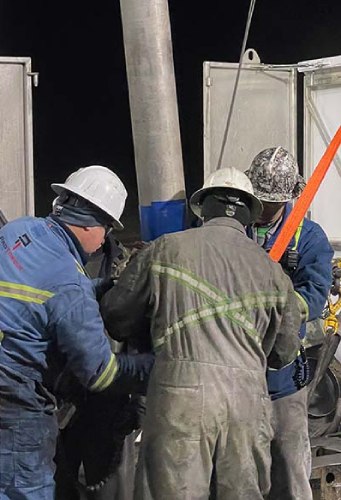
ProTorque has run chrome casing on carbon capture wells with computer-analyzed torque monitoring on every connection and the records handed to the operator. Crews trained for chrome handling, controlled make-up speed, and a graph on every joint.
If a CCS well is in your program, bring the tubular running conversation in at the casing design stage. The standards for this work are being set on the first wells, and the string you run is the one the record has to defend.