

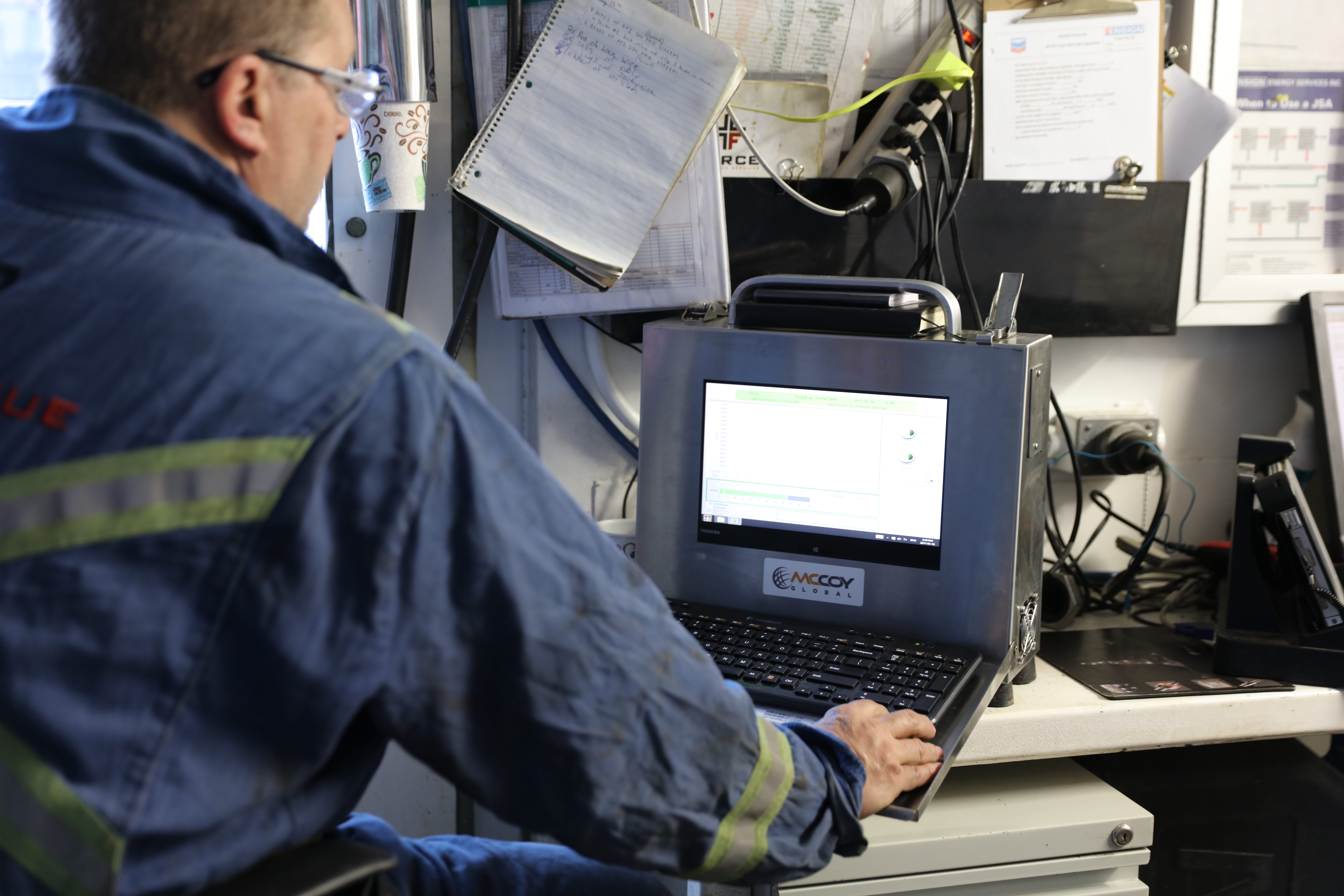
Computer Analyzed Torque Monitoring: Why Every Connection Should Be Made Up Under Analysis
A connection can hit its final torque number and still be wrong.
Cross-threading, galling, over-rotation, a shoulder that never seated properly. From the rig floor, all of these can look like a completed make-up. The torque gauge reads what it should. The problem goes in the wellbore, gets cemented in place, and shows up later as a leak path nobody can reach.
This is why ProTorque’s position is that every tubular connection should be made up under computer analysis. Not the critical strings. Not the premium connections only. Every connection.
What the final torque number doesn’t tell you
Final torque is one data point. The story of a make-up is the curve: torque plotted against turns and time, from stabbing to shoulder to final position. A healthy connection draws a recognizable shape. A damaged or misaligned one draws a different shape, even when both end at the same number.
CATM reads that curve in real time. The system tracks torque, turns, RPM, and, when applicable, shoulder data through every make-up, reviews torque against turns and time automatically, and confirms the acceptance criteria for that connection design, shoulder point included where one exists, before the connection is approved. If something is wrong, the make-up is stopped immediately, before the joint goes downhole and while the fix is still a matter of minutes.
The shape depends on the connection. A shouldered premium connection draws the full signature: thread engagement, seal engagement, and a shoulder point that has to land inside a defined window. Wedge-type premium connections make up through thread interference along the whole thread form, so there is no distinct shoulder, and the shape of the curve itself is the evidence. An API connection has no shoulder at all, and the torque and turns record is the only proof its make-up went right. Every design draws a different right answer, and reading the graph starts with knowing which one you are looking at.
Consistency, joint over joint
One good connection proves that connection. A consistent string is the actual goal. CATM overlays each make-up against the previous joints, so drift in the pattern gets caught as it develops rather than discovered in a post-job review. Real-time dump control protects the connection during make-up, cutting hydraulic power within a few hundredths of a second of the target being reached rather than trusting reaction time.
The record that follows the well
Every connection produces a graphical report, backed by statistical analysis and job summary reports. That documentation matters twice. During the job, it is how connection issues get caught and corrected on the spot. After the job, it is the evidence file: proof of what went in the wellbore, connection by connection, that stands up when integrity questions come years later.
And those questions come without warning. A connection gives no sign it is about to leak, and there is no downhole inspection that flags a joint as failing before it does. The make-up record is the only window anyone ever gets into whether the connection went together right.
For completions, this is not paperwork. Connection integrity is what protects packer isolation, and isolation is what keeps the frac where it belongs. The record is the difference between assuming the string is sound and demonstrating it.
The same standard from the top drive
Running casing with a CRT does not mean giving up the analysis. ProTorque’s torque sub monitors the top drive output as it pertains to the connection, torque, RPM, and hookload, and produces the same torque versus turns and time graph a power tong CATM system delivers. While drilling, it even delivers a hookload readout. Rated for hazardous area service and sampling at rates high enough to catch what matters, it holds CRT make-ups to the same standard as conventional ones.
One standard, both methods. The connection gets verified no matter how it gets made up.
How ProTorque approaches it
CATM is not an add-on ProTorque offers when an operator asks. It is how ProTorque makes up connections. The analysis runs on the job, the crew acts on it in real time, and the operator gets the record.
The goal is the same one behind every part of a ProTorque program: nothing enters the wellbore unverified, and there is documentation to prove it.
Explore ProTorque’s Computer Analyzed Torque Monitoring services: Power Tongs, Top Drive